


DOP plasticizer usually refers to Dioctyl Phthalate, more precisely called DEHP (Di(2-ethylhexyl) phthalate).
It is one of the most widely used phthalate-based plasticizers used to make PVC (polyvinyl chloride) and other plastics softer, more flexible, and easier to process.
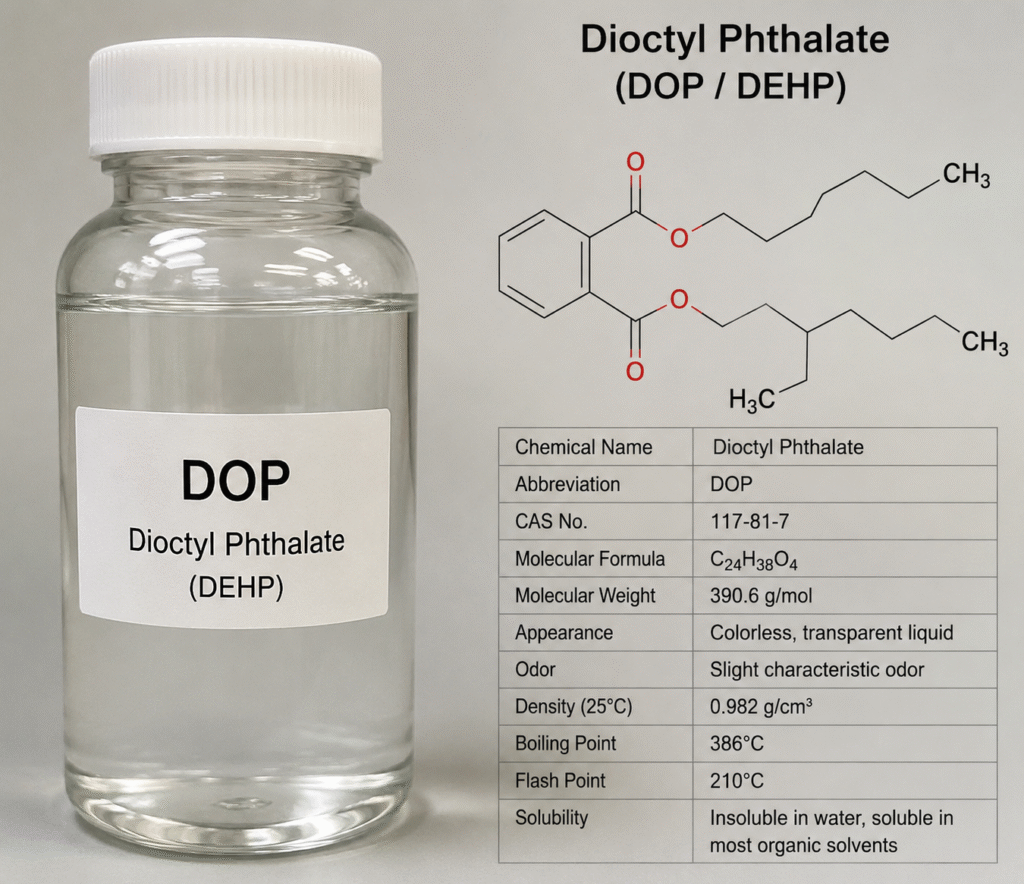
What it does?
Plasticizers like DOP are added to rigid plastics to:
- Increase flexibility (reduce brittleness)
- Improve softness and elasticity
- Lower processing temperature for manufacturing
- Enhance durability in flexible products
Where DOP is used?
Historically, it has been used in:
- Flexible PVC cables and wires
- Vinyl flooring
- Synthetic leather
- Shower curtains
- Tubing (medical and industrial)
- Packaging films
Why it’s important industrially?
DOP is popular because it:
- Works very efficiently (high plasticizing effect)
- Is relatively low cost
- Mixes well with PVC
- Provides good long-term flexibility
Safety and regulations
DOP (DEHP) has raised health concerns because:
- It can slowly migrate out of plastics over time
- It is classified as a reproductive toxicant in many regulatory systems
- It is restricted or heavily regulated in children’s products, toys, and some medical applications in the EU, US, and other regions
Because of this, many industries now use safer alternatives such as:
- DINP / DIDP (other phthalates with lower restrictions)
- DOTP (non-phthalate alternative, also called DEHT)
- Citrate-based plasticizers
In short
DOP is a traditional, highly effective PVC plasticizer, but it is increasingly being replaced due to health and environmental concerns.
#DOPsupplier #DOPmanufacturer #DOPOEM #DOPwholesale #quotation of DOP #bulk price of DOP